
Aksaray
Highlights within Aksaray
Açıksaray Ruins
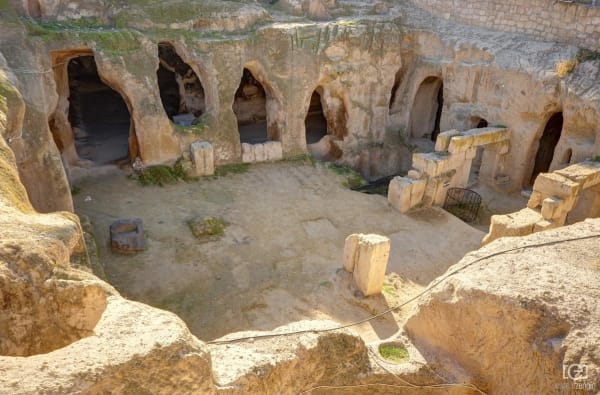
Açıksaray Ruins is a remarkable rock-cut settlement located near Güzelyurt in the southern Cappadocia region. Dating back to the Byzantine period, the site features carved dwellings, churches, monasteries, and underground spaces that reflect centuries of history. Key Info Location: Near Güzelyurt (Aksaray Province) Duration: 45–90 minutes Entrance: Paid Best Time: Daytime Experience Walking through Açıksaray Ruins feels like exploring an abandoned rock-carved city. Visitors can wander among ancient living quarters, monastic complexes, and churches while enjoying a peaceful atmosphere away from the crowds found at Cappadocia's more famous attractions. Highlights Byzantine rock-cut settlement Ancient churches and monasteries Historic cave dwellings Quiet and less crowded site How to Visit Açıksaray Ruins are best visited by private car or as part of extended tours exploring the southern Cappadocia region, often combined with Güzelyurt, Monastery Valley, and Narlıgöl.
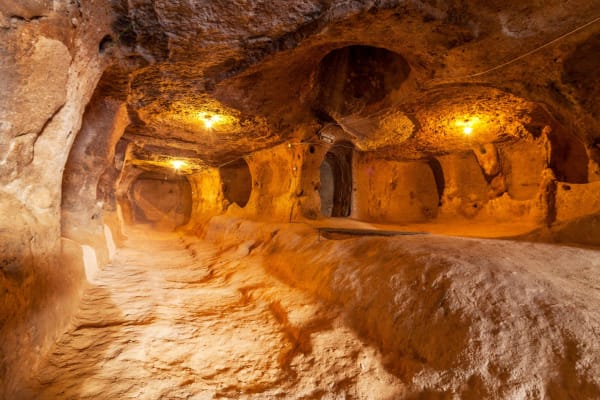
Gaziemir Underground City
Gaziemir Underground City is one of Cappadocia's largest and least-visited underground settlements. Spread across multiple levels, it is notable for its spacious layout, underground winery, church, kitchens, and living quarters, offering a fascinating look into the region's underground history. Key Info Location: Gaziemir Village, Cappadocia Duration: 45–90 minutes Entrance: Paid Best Time: Daytime Experience Unlike many underground cities with narrow passages, Gaziemir features larger interconnected spaces that allow visitors to explore different sections comfortably. The preserved winery, church, storage rooms, and ventilation system reveal how entire communities once lived and worked beneath the surface. Highlights One of Cappadocia's largest underground cities Historic underground winery Rock-cut church and living spaces Spacious tunnels and chambers How to Visit Gaziemir Underground City is best visited by private car or as part of extended cultural tours exploring the southern Cappadocia region, often combined with nearby historical villages and lesser-known attractions.
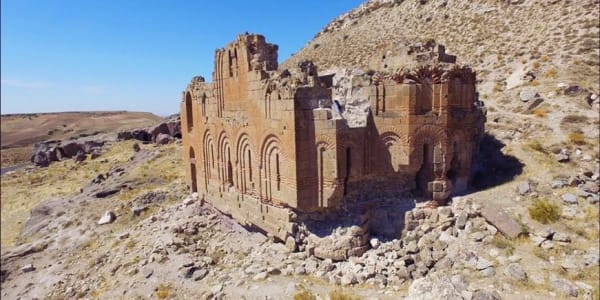
Çanlı Kilise (Bell Church)
Çanlı Kilise (Bell Church) is one of the largest freestanding rock-cut churches in the Cappadocia region. Located near Güzelyurt in Aksaray Province, the church dates to the Byzantine period and is distinguished by its impressive multi-story architecture and traces of colorful frescoes. Key Info Location: Near Güzelyurt, Aksaray (Southern Cappadocia) Duration: 20–40 minutes Entrance: Free Best Time: Daytime Experience Unlike many churches carved into valley cliffs, Çanlı Kilise rises as an independent rock-cut structure overlooking the surrounding landscape. Visitors can explore its spacious interior, multiple levels, and remnants of Byzantine wall paintings while enjoying panoramic views across the volcanic terrain. Highlights One of Cappadocia's largest freestanding rock-cut churches Multi-story Byzantine architecture Remains of colorful frescoes Panoramic views over southern Cappadocia Unique architectural design unlike most valley churches How to Visit Çanlı Kilise is best reached by private vehicle from Güzelyurt or Aksaray. It is commonly combined with Açıksaray (Open Palace), Monastery Valley, Güzelyurt, Kızıl Kilise (Red Church), and Narlıgöl, making it an excellent stop on a southern Cappadocia itinerary.
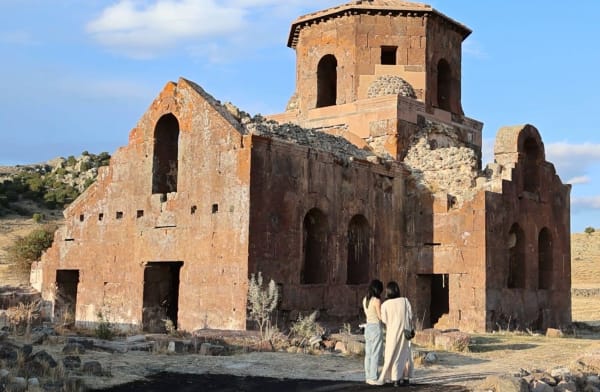
Kızıl Kilise (Red Church)
Kızıl Kilise (Red Church) is one of the oldest surviving masonry churches in Cappadocia. Located near Sivrihisar Village in the Güzelyurt district of Aksaray, the church was built between the 5th and 6th centuries using distinctive red volcanic stone, giving the monument its modern name. Key Info Location: Near Sivrihisar Village, Güzelyurt, Aksaray Duration: 20–30 minutes Entrance: Free Best Time: Daytime Experience Unlike Cappadocia's famous rock-cut churches, Kızıl Kilise is a free-standing masonry structure with a domed central plan. Visitors can admire its impressive stone construction, early Byzantine architecture, and the peaceful rural landscape surrounding one of Anatolia's oldest Christian monuments. Highlights One of Cappadocia's oldest surviving churches Built during the 5th–6th centuries Constructed from distinctive red volcanic stone Rare example of free-standing Byzantine architecture Historic landmark in southern Cappadocia How to Visit Kızıl Kilise is best reached by private vehicle from Güzelyurt. It is commonly combined with Çanlı Kilise (Bell Church), Açıksaray (Open Palace), Monastery Valley, Narlıgöl, and other historical attractions in the Aksaray region, making it an ideal stop for visitors interested in early Christian architecture.
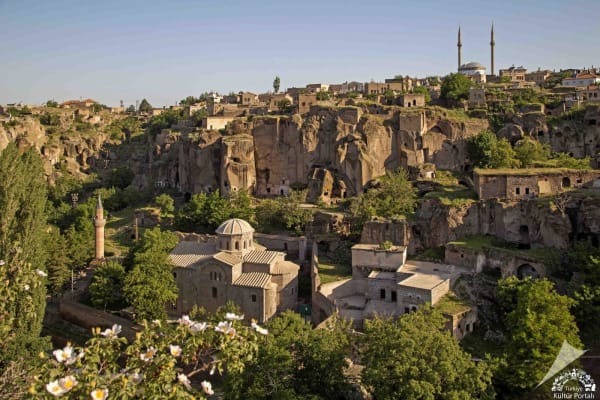
Monastery Valley
Monastery Valley is one of the most important early Christian settlements in Cappadocia, located in Güzelyurt, Aksaray. Stretching approximately 4–5 km, the valley preserves the remains of one of the region's earliest monastic communities, with 28 rock-cut churches carved into the volcanic landscape. It is both an archaeological site and a scenic hiking destination. Key Info Location: Güzelyurt, Aksaray (Southern Cappadocia) Duration: 1–3 hours Entrance: Paid Best Time: Spring and autumn Experience Monastery Valley offers a unique combination of history and nature. As you follow the valley trail, you'll encounter churches, monasteries, chapels, living quarters, and ancient rock-cut shelters that once formed one of Cappadocia's earliest monastic centers. The valley played an important role in the development of Christianity, and St. Gregory of Nazianzus, one of the Cappadocian Fathers, lived in Güzelyurt and contributed significantly to the spread of Christianity in Anatolia. Today, the peaceful hiking route allows visitors to explore this remarkable heritage surrounded by dramatic volcanic scenery. Highlights One of Cappadocia's earliest monastic settlements 28 Byzantine rock-cut churches Historic churches including Kömürlü Church Scenic hiking through volcanic landscapes Strong connection to St. Gregory of Nazianzus How to Visit Monastery Valley is accessed from Güzelyurt and is best explored on foot. The hiking trail can be extended beyond Kömürlü Church toward Sivrihisar Castle and Kızıl Kilise (Red Church), making it one of the richest historical walking routes in southern Cappadocia.
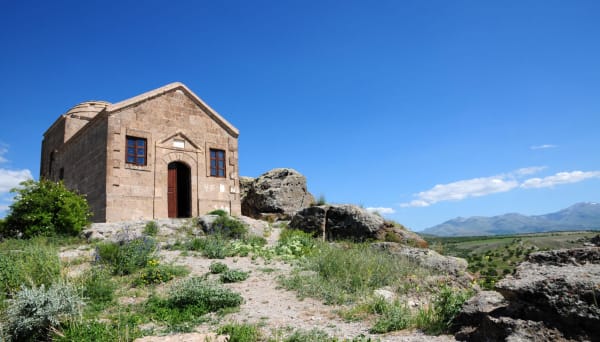
Yüksek Church
Yüksek Church is one of the most impressive historical churches in Güzelyurt, Aksaray. Perched on a high rocky hillside overlooking the town, the church is renowned for its elevated location, Byzantine architecture, and panoramic views across the Melendiz Valley. Dating to the Byzantine period, it was an important place of worship for the Christian communities of the region. Key Info Location: Güzelyurt, Aksaray (Southern Cappadocia) Duration: 20–40 minutes Entrance: Paid Best Time: Morning or late afternoon Experience A short uphill walk leads visitors to the church, where they are rewarded with spectacular views over Güzelyurt and the surrounding volcanic landscape. Inside, the church features a cross-in-square plan, carved architectural details, and remnants of Byzantine frescoes that reflect its historical and religious significance. Highlights Elevated hilltop location with panoramic views Historic Byzantine church Cross-in-square architectural plan Remains of frescoes and stone carvings One of Güzelyurt's most iconic landmarks How to Visit Yüksek Church is reached by a short climb from the center of Güzelyurt. It is commonly combined with Monastery Valley, Church of Saints Gregory the Theologian, Kızıl Kilise (Red Church), Çanlı Kilise (Bell Church), and Açıksaray, making it an essential stop when exploring southern Cappadocia.
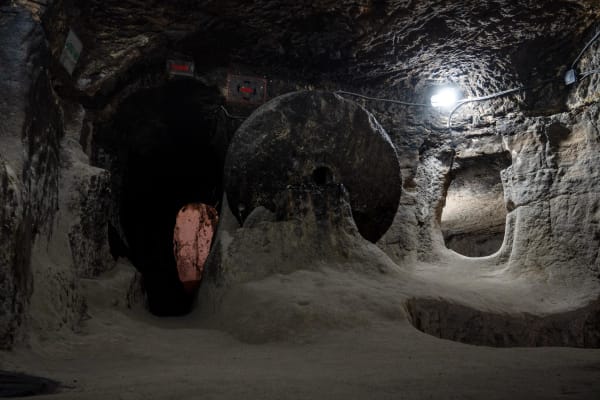
Saratlı Underground City
Saratlı Underground City, also known as Kırkgöz Underground City, is one of the largest underground settlements in the Aksaray region of Cappadocia. Built over multiple levels, it served as a refuge for local communities during periods of invasion and preserves an impressive network of tunnels, living quarters, storage rooms, and communal spaces. Key Info Location: Saratlı Village, Aksaray (Southern Cappadocia) Duration: 30–60 minutes Entrance: Paid (Museum Pass accepted) Best Time: Daytime Experience Visitors descend into a well-preserved underground labyrinth where daily life once continued beneath the surface. The city features interconnected corridors, kitchens, wine and food storage areas, ventilation shafts, and defensive stone doors designed to protect its inhabitants. Compared to the more famous underground cities, Saratlı offers a quieter and less crowded experience. Highlights Multi-level underground settlement Massive rolling stone security doors Historic kitchens, storage rooms, and living quarters Advanced ventilation system Less crowded than Cappadocia's major underground cities How to Visit Saratlı Underground City is easily reached by car from Aksaray or Nevşehir. It is commonly combined with Ihlara Valley, Selime Cathedral, Monastery Valley, Güzelyurt, and Narlıgöl, making it an excellent stop on a southern Cappadocia itinerary.
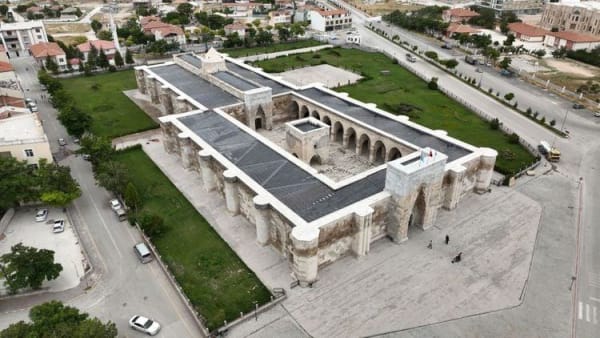
Sultanhanı Caravanserai
Sultanhanı Caravanserai is the largest and one of the finest preserved Seljuk caravanserais in Türkiye. Built in 1229 during the reign of Sultan Alaeddin Keykubad I and later restored in 1278, it served as a major stop for merchants traveling along the historic Silk Road between Konya and Persia. Key Info Location: Sultanhanı, Aksaray Duration: 30–60 minutes Entrance: Paid Best Time: Daytime Experience Passing through the monumental marble entrance, visitors enter a vast courtyard surrounded by rooms that once accommodated merchants, travelers, animals, and valuable goods. The caravanserai also features a beautifully elevated mosque in the center of the courtyard and an impressive covered winter hall, showcasing the remarkable engineering and craftsmanship of the Seljuk period. Highlights Largest Seljuk caravanserai in Türkiye Magnificent marble entrance portal Historic Silk Road trading post Central courtyard mosque (Köşk Mosque) Impressive covered winter hall Outstanding example of Seljuk architecture How to Visit Sultanhanı Caravanserai is located about 40 km west of Aksaray on the historic Silk Road. It is commonly combined with Aksaray city, Ihlara Valley, Selime Cathedral, Monastery Valley, and other attractions in southern Cappadocia, making it an essential stop for visitors interested in medieval Anatolian history.
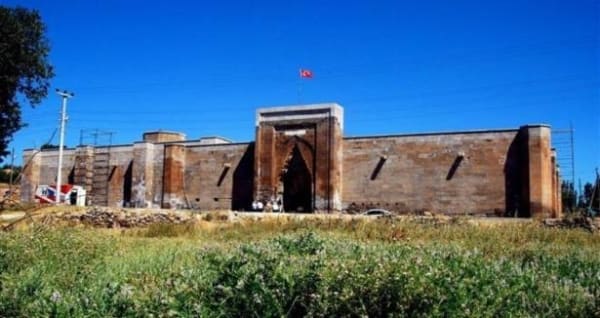
Ağzıkarahan Caravanserai
Ağzıkarahan Caravanserai is one of the most important Seljuk caravanserais in Cappadocia. Built in the 13th century during the reign of Sultan Alaeddin Keykubad I and completed under Sultan Gıyaseddin Keyhüsrev II, it served as a major resting place for merchants traveling along the historic Silk Road. Key Info Location: Near Aksaray, Southern Cappadocia Duration: 30–45 minutes Entrance: Paid Best Time: Daytime Experience Visitors enter through a monumental stone portal into a spacious courtyard surrounded by rooms that once housed merchants, animals, and valuable cargo. The complex also includes a large covered hall for winter accommodation and a small elevated mosque, showcasing the impressive engineering and architectural achievements of the Seljuk Empire. Highlights 13th-century Seljuk caravanserai Monumental stone entrance portal Historic Silk Road trading stop Courtyard mosque and covered winter hall Well-preserved Seljuk architecture One of the finest caravanserais in Cappadocia How to Visit Ağzıkarahan is located approximately 15 km northeast of Aksaray on the historic Silk Road. It is commonly combined with Sultanhanı Caravanserai, Ihlara Valley, Selime Cathedral, Monastery Valley, and Aksaray, making it an excellent stop for visitors exploring the historical trade routes of central Anatolia.
Alayhan Caravanserai
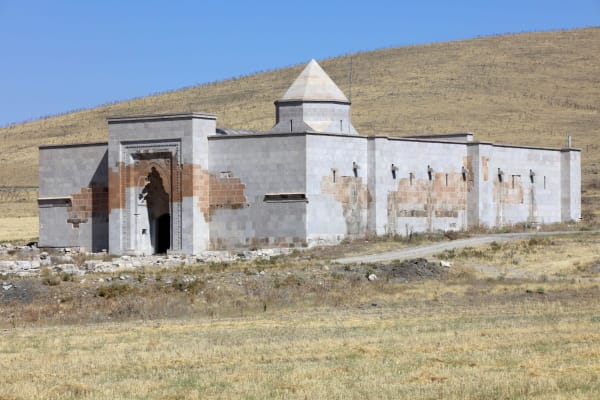
Alayhan Caravanserai is one of the earliest surviving Seljuk caravanserais in Anatolia. Built in the 12th century during the reign of Sultan Kılıç Arslan II, it played a key role in protecting merchants and facilitating trade along the historic Silk Road. Although smaller than Sultanhanı and Ağzıkarahan, it is considered one of the pioneering examples of Seljuk caravanserai architecture. Key Info Location: Near Aksaray, Southern Cappadocia Duration: 20–40 minutes Entrance: Free Best Time: Daytime Experience Walking through Alayhan offers a glimpse into the early development of Seljuk roadside architecture. Visitors can explore its stone halls, vaulted chambers, and central courtyard while imagining the caravans of merchants, pilgrims, and travelers who once rested here during long journeys across Anatolia. Highlights One of Anatolia's earliest Seljuk caravanserais Built during the reign of Sultan Kılıç Arslan II Historic stop on the Silk Road Early example of Seljuk stone architecture Peaceful and less-visited historical site How to Visit Alayhan Caravanserai is located along the historic Silk Road between Aksaray and Nevşehir. It is often visited together with Ağzıkarahan Caravanserai, Sultanhanı Caravanserai, Ihlara Valley, and other historical attractions in southern Cappadocia, making it an excellent stop for travelers interested in medieval trade routes and Seljuk history.
Aksaray Museum
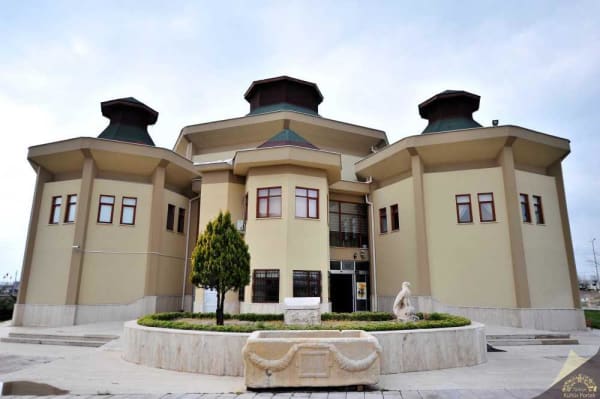
Aksaray Museum is the region's principal archaeological museum, presenting the rich cultural heritage of Aksaray and southern Cappadocia. Its collections span from the Neolithic period to the Ottoman era, featuring artifacts discovered at nearby archaeological sites, underground cities, churches, and ancient settlements. Key Info Location: Aksaray City Center Duration: 1–2 hours Entrance: Paid (Museum Pass accepted) Best Time: During museum opening hours Experience The museum offers a chronological journey through thousands of years of Anatolian history. Visitors can explore archaeological finds from Aşıklı Höyük, Acemhöyük, Ihlara Valley, Açıksaray, and the surrounding region, including stone sculptures, pottery, coins, sarcophagi, Byzantine artifacts, and ethnographic collections that illustrate everyday life across different civilizations. Highlights Archaeological and ethnographic collections Artifacts from Aşıklı Höyük and Acemhöyük Roman, Byzantine, Seljuk, and Ottoman exhibits Stone sculptures, pottery, coins, and sarcophagi Excellent introduction to the history of southern Cappadocia How to Visit Aksaray Museum is located in the city center and is easily accessible by car or public transportation. It is commonly combined with visits to Ihlara Valley, Selime Cathedral, Monastery Valley, Açıksaray (Open Palace), Ağzıkarahan Caravanserai, and Sultanhanı Caravanserai, making it an ideal starting point for exploring the historical attractions of southern Cappadocia.