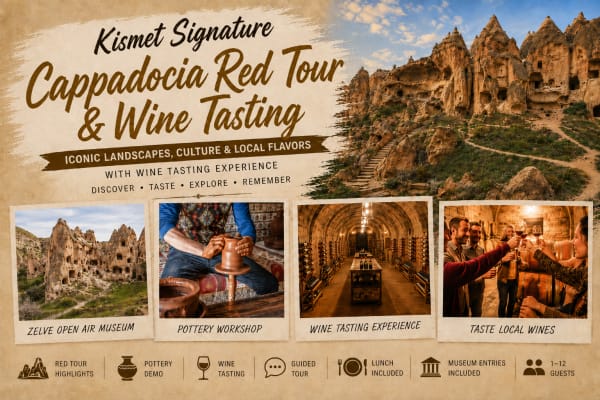
Wycieczka po Cappadocji: Czerwona Trasa (kultowe doliny i skansen | wycieczki grupowe i prywatne)
7-8Türkçe · İngilizce
- Tour Guide (English/Turkish)
- Hotel Pick-up and Drop-off
- Enrty fees

Compare Goreme and Zelve Open-Air Museums by history, churches, scenery, ticket value and visitor experience, with Red Tour Eco and Plus recommendations.
Goreme Open-Air Museum and Zelve Open-Air Museum are two of Cappadocia’s most important historical attractions, but they offer very different experiences.
Goreme is primarily a religious and monastic complex known for its rock-cut churches and well-preserved Byzantine frescoes. Zelve feels more like an abandoned cave settlement, combining churches, homes, tunnels and a broader natural landscape.
Both are worth visiting. However, travellers with limited time should choose according to whether they are more interested in religious art and history or in cave life, walking and scenery.
For a quick side-by-side overview of ticket value, visit duration, historical importance and overall experience, see our Goreme vs Zelve Open-Air Museum comparison.
Goreme Open-Air Museum is one of Cappadocia’s most historically significant sites. The complex contains rock-cut churches, chapels, monasteries, dining halls and communal spaces associated with early Christian monastic life.
Its main strength is the quality of its religious art. Several churches contain detailed Byzantine frescoes dating mainly from the 10th to 12th centuries. These paintings illustrate biblical scenes, saints and important moments from the life of Christ.
Important structures include:
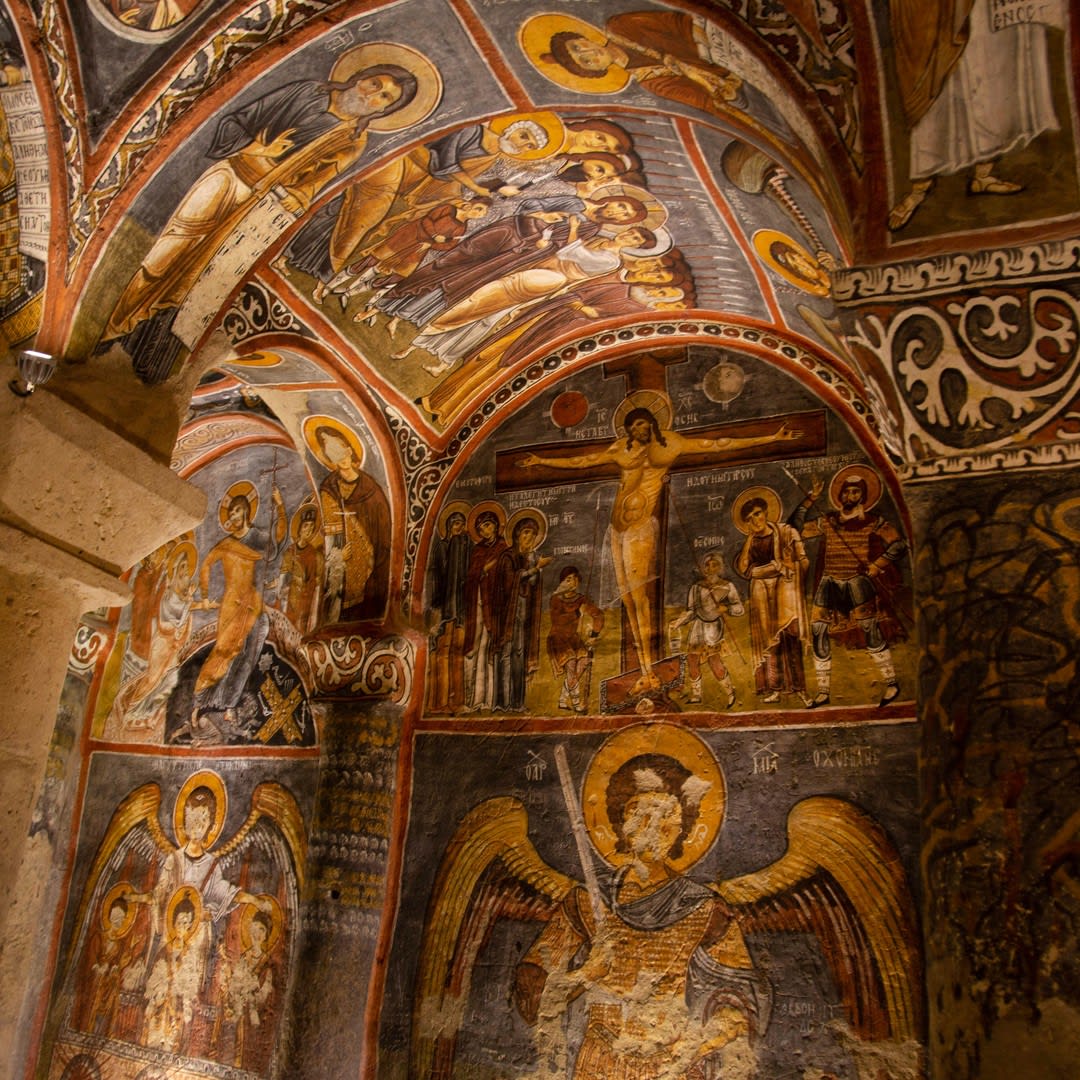
Tokali Church is particularly notable for its large interior and blue-toned frescoes. Dark Church contains some of the best-preserved paintings in Cappadocia because only a small amount of natural light entered the church over the centuries.
Choose Goreme when your priorities are:
For anyone planning to visit only one open-air museum in Cappadocia, Goreme is generally the stronger first choice.
Dark Church is located inside Goreme Open-Air Museum but normally requires a separate entrance ticket.
The additional fee can make a complete Goreme visit more expensive than Zelve. However, travellers with a strong interest in Byzantine art should consider entering because its frescoes are among the museum’s greatest highlights.
Travellers who are less interested in religious paintings can still have a meaningful visit without purchasing the additional ticket.
Zelve offers a broader and more landscape-focused experience. Instead of functioning mainly as a religious complex, it represents a former cave settlement where daily life, housing and religious activity existed together.
Visitors walk through valleys containing:
The site feels more open and exploratory than Goreme. Its walking route covers a larger natural setting, allowing visitors to experience the relationship between Cappadocia’s volcanic landscape and its historic cave architecture.
Choose Zelve when your priorities are:
Zelve generally feels less formal than Goreme. Rather than moving between a concentrated series of decorated churches, visitors explore the remains of an entire cave settlement.
One of Zelve’s main advantages is that its entrance ticket also includes access to Pasabag.
Pasabag is famous for some of Cappadocia’s most distinctive mushroom-shaped fairy chimneys. Combining the two sites creates a balanced experience: Zelve provides cave-settlement history and a longer walking route, while Pasabag offers some of the region’s most recognisable natural formations.
This makes Zelve particularly attractive for budget-conscious travellers or visitors who want to see more than one attraction with a single ticket.
Goreme Open-Air Museum is the clear winner for churches and frescoes.
It contains a more important concentration of religious structures, and the surviving paintings are generally better preserved and more artistically significant. The site offers a much stronger understanding of Cappadocia’s monastic traditions and Byzantine religious art.
Zelve also contains rock-cut churches, but religious art is not its main attraction. Its value comes from the combination of churches, homes, tunnels and the wider settlement landscape.
Choose Goreme for church quality. Choose Zelve for a more varied cave-settlement experience.
Zelve generally offers the stronger natural landscape.
Its former settlement spreads through multiple valleys surrounded by volcanic formations. The visit involves more outdoor walking and provides broader views of the terrain.
Goreme is also visually impressive, but its structures are concentrated within a smaller museum complex. Its main value lies inside the churches rather than in an extended valley walk.
Photographers interested in natural formations, cave façades and wider landscapes may prefer Zelve. Visitors interested in interior frescoes and historical details should prioritise Goreme.
Goreme Open-Air Museum is usually busier, particularly during the main tour hours.
Its international importance and central location make it a standard stop on many Cappadocia itineraries. Some churches have small interiors, so visitors may occasionally need to wait before entering.
Zelve is generally calmer and provides more space to spread out across the walking route.
For a quieter Goreme visit, arrive early in the morning. Zelve is also more comfortable during the morning or late afternoon, especially during the hotter summer months.
Goreme has a more concentrated and structured visitor route. Most major churches and monasteries are located relatively close together, making the museum easier to understand in a limited amount of time.
Zelve covers a wider area and involves more outdoor walking. Its route includes slopes, uneven surfaces and natural pathways.
In general:
Allow approximately 1.5 to 2 hours for Goreme Open-Air Museum, especially when visiting several churches and adding Dark Church.
Zelve generally takes around 1 to 1.5 hours, although visitors who enjoy photography and walking may spend longer. Pasabag requires additional time if visited with the same ticket.
Travellers visiting Zelve and Pasabag together should reserve at least half a day when transport and relaxed exploration are included.
Zelve generally offers better ticket value because it is more affordable and the same ticket includes Pasabag.
Goreme costs more, particularly when the additional Dark Church ticket is included. However, it provides access to some of Cappadocia’s most historically important churches and best-preserved frescoes.
Therefore, value depends on your interests:
Entrance prices may change, so check our updated Cappadocia museum entrance fees guide before visiting.
The Red Tour Eco is the more affordable option for travellers who want to explore Zelve and Pasabag as part of a guided day tour.
This route is suitable for visitors who prefer:
Because Zelve and Pasabag are included with the same entrance ticket, the Red Tour Eco provides good value while still covering some of northern Cappadocia’s most recognisable landscapes.
It is a good choice for travellers who are less focused on frescoes and prefer a varied day combining geology, scenery and settlement history.
The Red Tour Plus visits Goreme Open-Air Museum and is designed for travellers who want a stronger historical and cultural programme.
This route is more suitable for visitors interested in:
A licensed guide adds considerable value at Goreme because the meaning of the frescoes, churches and monastic spaces is not always obvious without explanation.
Choose Red Tour Plus when Goreme Open-Air Museum is one of your priorities and you want museum entrances and historical interpretation to form a central part of the day.
Choose Red Tour Eco if you:
Choose Red Tour Plus if you:
The two tours are not simply cheaper and more expensive versions of the same programme. They are intended for visitors with different priorities.
Travellers with sufficient time should consider visiting both because the two sites complement each other.
Goreme explains Cappadocia’s religious and monastic history through churches, chapels and frescoes. Zelve shows how cave spaces were used as homes, storage areas, religious buildings and parts of a functioning settlement.
Visiting both provides a more complete understanding of the region:
However, travellers on a short itinerary do not need to force both museums into the same day.
For a first visit to Cappadocia, choose Goreme Open-Air Museum when you can visit only one. Its churches, monasteries and frescoes make it one of the region’s most important historical attractions.
Choose Zelve Open-Air Museum when you prefer a quieter, more affordable and landscape-focused experience. The combined Zelve and Pasabag ticket also gives it excellent overall value.
Our recommendation is simple:
Neither museum replaces the other completely. They tell two different parts of Cappadocia’s story.
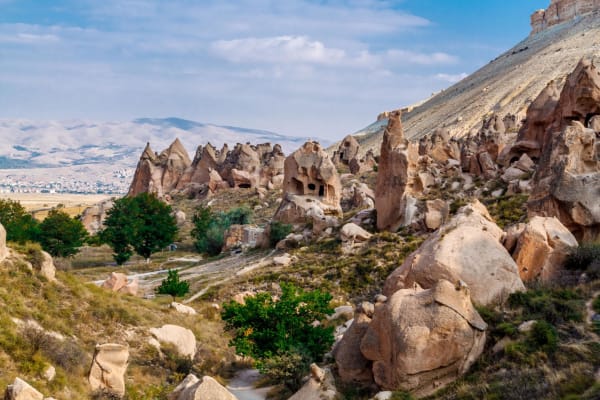
Skansen Zelve to jedno z najbardziej wyjątkowych miejsc historycznych w Kapadocji, znane z opuszczonej wioski jaskiniowej i imponujących formacji skalnych. Zelve, które niegdyś było domem zarówno dla społeczności chrześcijańskiej, jak i muzułmańskiej, oferuje bardziej swobodne i pełne przygód wrażenia w porównaniu z innymi skansenami w regionie. Lokalizacja: Avanos – Zelve Czas trwania: 1–2 godziny Wstęp: płatny (ważna karta Museum Pass) Najlepsza pora: rano – późne popołudnie Wrażenia Zwiedzanie Zelve przypomina spacer po opuszczonej wiosce zatrzymanej w czasie. Obszar ten rozciąga się na trzy połączone ze sobą doliny pełne jaskiń mieszkalnych, tuneli i otwartych ścieżek. W przeciwieństwie do bardziej uporządkowanych obiektów muzealnych, Zelve pozwala na swobodniejsze zwiedzanie, dając odwiedzającym możliwość wędrówki po jaskiniach i podziwiania krajobrazu z bliska. Najważniejsze atrakcje Opuszczona wioska jaskiniowa o znaczeniu historycznym Trzy połączone ze sobą doliny do zwiedzania Unikalne formacje skalne i bajkowe kominy Mniej zatłoczone i bardziej otwarte miejsce w porównaniu z Muzeum Göreme Świetne miejsce do zwiedzania i robienia zdjęć Jak się tam dostać? Do Muzeum na świeżym powietrzu w Zelve łatwo dojechać samochodem i jest ono często uwzględniane w planach wycieczek Red Tour. Zwiedzający mogą spacerować po oznakowanych ścieżkach łączących doliny. Zaleca się założenie wygodnych butów, ponieważ niektóre obszary mają nierówny teren i niewielkie wzniesienia.
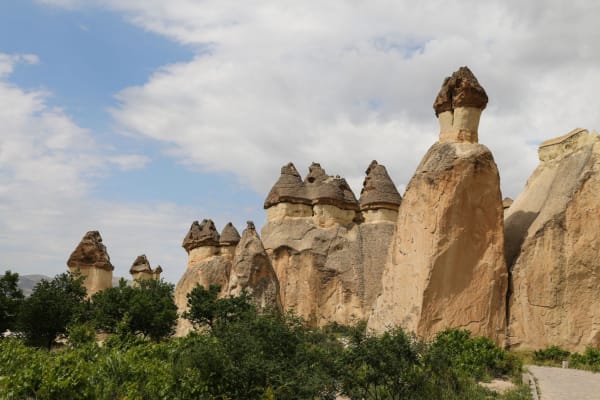
Paşabağ, znane również jako Dolina Mnichów, to jedno z najbardziej charakterystycznych miejsc w Kapadocji, słynące z unikalnych wielogłowych kominów wróżkowych oraz historycznych siedzib pustelników. Położone w pobliżu Avanos, przy drodze do Zelve, miejsce to zachwyca zarówno naturalnym pięknem, jak i znaczeniem kulturowym. Lokalizacja: Avanos – Zelve Czas trwania: 45–90 minut Wstęp: płatny (ważna karta Museum Pass) Najlepsza pora: rano – późne popołudnie Wrażenia Spacer po Paşabağ przypomina wkroczenie do innego świata, gdzie z ziemi dramatycznie wyrastają wysokie kominy wróżek. Niektóre z tych formacji mają wiele czap, co czyni je jednymi z najbardziej charakterystycznych w Kapadocji. Dolina była niegdyś domem dla pustelników, w tym św. Symeona, którzy żyli w odosobnieniu wśród tych formacji skalnych. Nadal można wejść do niektórych jaskiń i doświadczyć tego wyjątkowego stylu życia. Najważniejsze atrakcje Unikalne wielogłowe kominy wróżek Historyczne jaskinie pustelników i kaplice Jedna z najbardziej fotogenicznych dolin Łatwe szlaki spacerowe odpowiednie dla wszystkich odwiedzających Bogata historia kulturowa i religijna Jak zwiedzać? Do Paşabağ łatwo dojechać samochodem i jest to standardowy przystanek na trasach Czerwonej Wycieczki. Odwiedzający mogą zwiedzać okolicę pieszo po wyraźnie wytyczonych ścieżkach. Najlepiej wybrać się tam wcześnie rano, aby uniknąć tłumów i w pełni cieszyć się atmosferą.
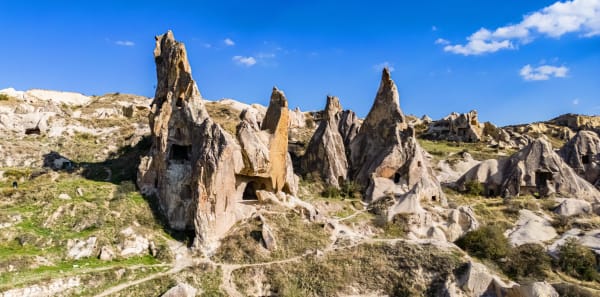
Skansen w Göreme to jedno z najważniejszych miejsc historycznych i kulturowych Kapadocji, obejmujące kompleks wykutych w skale kościołów, kaplic i klasztorów, ozdobionych dobrze zachowanymi freskami. Obiekt ten znajduje się na liście światowego dziedzictwa UNESCO i stanowi obowiązkowy punkt programu dla wszystkich, którzy chcą poznać wczesnochrześcijańską historię regionu. Lokalizacja: Göreme Czas trwania: 1–2 godziny Wstęp: płatny (ważna karta Museum Pass, dodatkowa opłata za Ciemny Kościół) Najlepsza pora: rano (aby uniknąć tłumów) Wrażenia Zwiedzanie Muzeum na świeżym powietrzu w Göreme przypomina wejście do kompleksu klasztornego wykutego w całości w skale. Znajduje się tu kilka kościołów z barwnymi freskami pochodzącymi z X–XII wieku. Najważniejsze atrakcje, takie jak Ciemny Kościół (Karanlık Kilise) i Kościół Tokalı, stanowią jedne z najlepiej zachowanych przykładów sztuki bizantyjskiej w Kapadocji. Najważniejsze atrakcje Miejsce wpisane na listę światowego dziedzictwa UNESCO Wykute w skale kościoły z dobrze zachowanymi freskami Słynne kościoły, takie jak Ciemny Kościół i Kościół Tokalı Wgląd w życie monastyczne wczesnego chrześcijaństwa Łatwa do pokonania trasa spacerowa w obrębie kompleksu Jak się tam dostać? Do Skansenu Göreme można łatwo dojechać samochodem lub dojść pieszo z centrum Göreme. Znajduje się on w większości planów wycieczek Red Tour. Zwiedzający poruszają się po kompleksie wyznaczoną ścieżką, a wycieczki z przewodnikiem mogą wzbogacić to doświadczenie, wyjaśniając szczegóły historyczne i artystyczne.
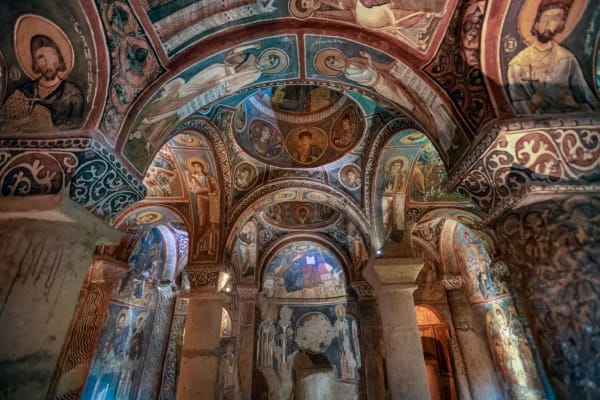
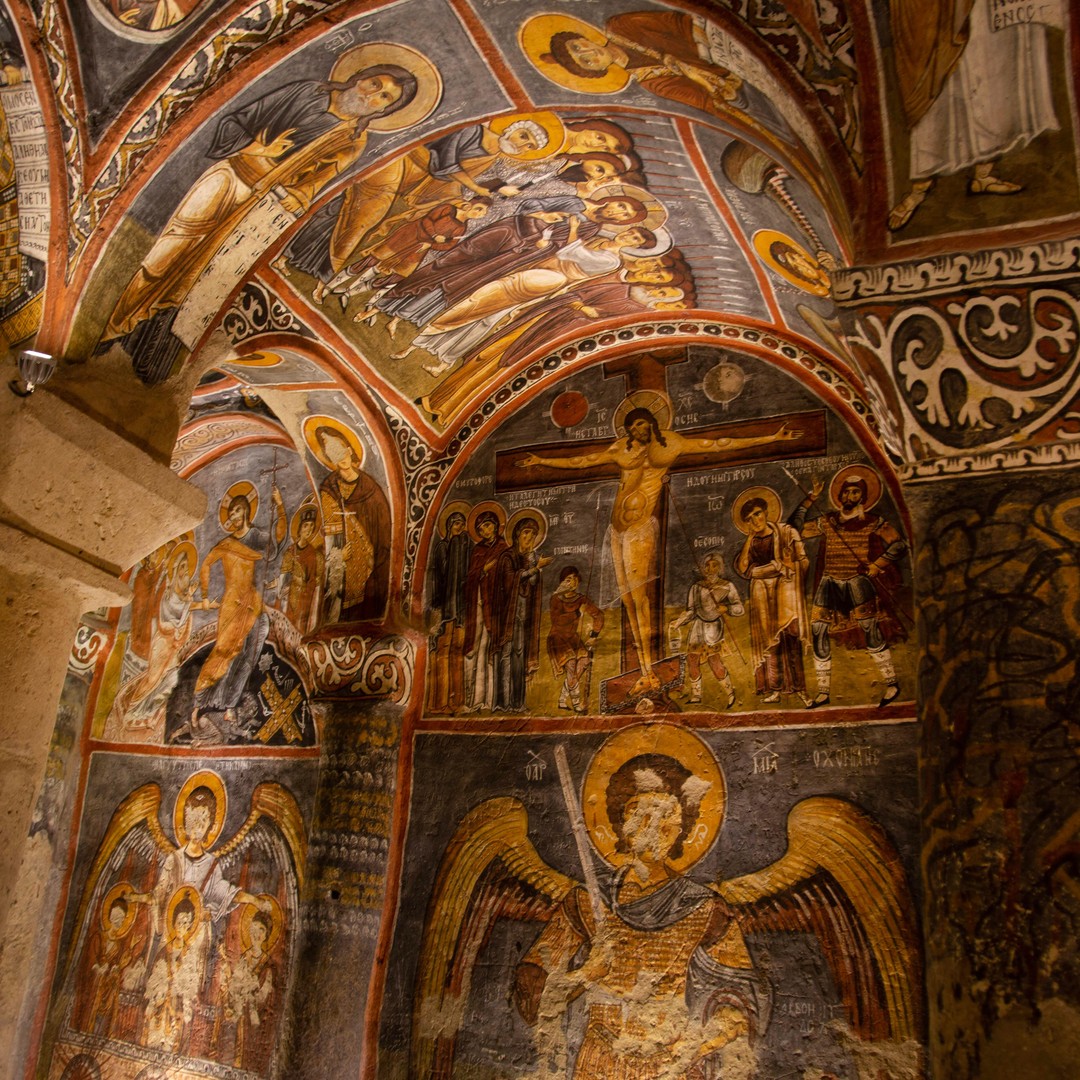
Ciemny Kościół (Karanlık Kilise) to jeden z najbardziej znanych i najlepiej zachowanych kościołów w Kapadocji, położony na terenie Skansenu w Göreme. Słynie przede wszystkim z żywych fresków, które zachowały swoje pierwotne kolory dzięki ograniczonemu nasłonecznieniu na przestrzeni wieków. Lokalizacja: Skansen w Göreme Czas zwiedzania: 15–30 minut Wstęp: Wymagana dodatkowa opłata (oprócz biletu do skansenu) Najlepsza pora: rano (mniej tłoczno) Atrakcje Wejście do Ciemnego Kościoła przypomina wkroczenie do doskonale zachowanego dzieła sztuki bizantyjskiej. Ponieważ kościół ma bardzo małe okna, z biegiem czasu wpadało do niego bardzo mało światła, co pomogło chronić freski przed blaknięciem. W środku zobaczysz szczegółowe sceny biblijne pokrywające ściany i sufity, o niezwykle żywych kolorach i skomplikowanych kompozycjach. Najważniejsze atrakcje Najlepiej zachowane freski w Kapadocji Bogate sceny biblijne i szczegółowe dzieła sztuki Unikalne ciemne wnętrze, które chroniło malowidła Znajduje się w Muzeum na Świeżym Powietrzu w Göreme Obowiązkowy punkt programu dla miłośników historii i sztuki Jak zwiedzać? Ciemny Kościół można zwiedzać wyłącznie w ramach Muzeum na Świeżym Powietrzu w Göreme. Po wejściu do głównego kompleksu można dostać się do kościoła za dodatkową opłatą. Ze względu na jego popularność i ograniczoną przestrzeń wewnątrz zaleca się wizytę wcześnie rano.
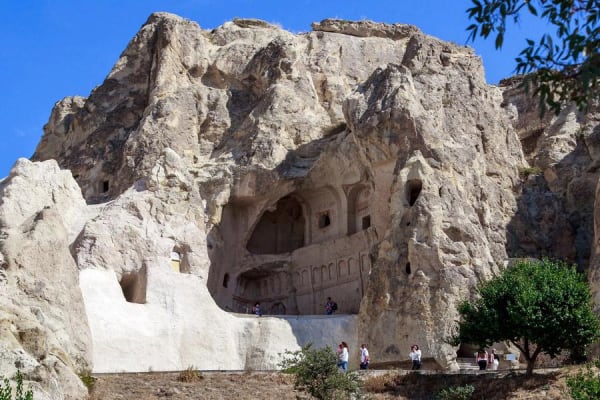
Kościół Jabłkowy (Kościół Elmalı) jest jednym z najlepiej zachowanych kościołów wykutych w skale w Muzeum na Świeżym Powietrzu w Göreme. Pochodzi z XI wieku i zachwyca elegancką architekturą oraz barwnymi freskami bizantyjskimi przedstawiającymi sceny z życia Chrystusa. Najważniejsze informacje Lokalizacja: Muzeum na świeżym powietrzu w Göreme, Göreme Czas zwiedzania: 10–20 minut Wstęp: w cenie biletu do Muzeum na świeżym powietrzu w Göreme Najlepszy czas na zwiedzanie: w godzinach otwarcia muzeum Atrakcje Wewnątrz kościoła zwiedzający mogą podziwiać pięknie odrestaurowane freski pokrywające ściany i centralną kopułę. Malowidła przedstawiają ważne sceny biblijne i ukazują niezwykłe tradycje artystyczne okresu bizantyjskiego. Pomimo stosunkowo niewielkich rozmiarów Kościół Jabłkowy jest uważany za jedną z architektonicznych i artystycznych perełek muzeum. Najważniejsze atrakcje Dobrze zachowane freski bizantyjskie Architektura kościoła na planie krzyża w kwadracie Barwne biblijne malowidła ścienne Jeden z najczęściej odwiedzanych kościołów w muzeum Jak zwiedzać Kościół Apple stanowi część trasy zwiedzania Muzeum na Świeżym Powietrzu w Göreme i można go zwiedzać w ramach biletu wstępu do muzeum. Zwiedzanie z przewodnikiem pozwala lepiej zrozumieć symbolikę, historię oraz proces renowacji tych niezwykłych fresków.
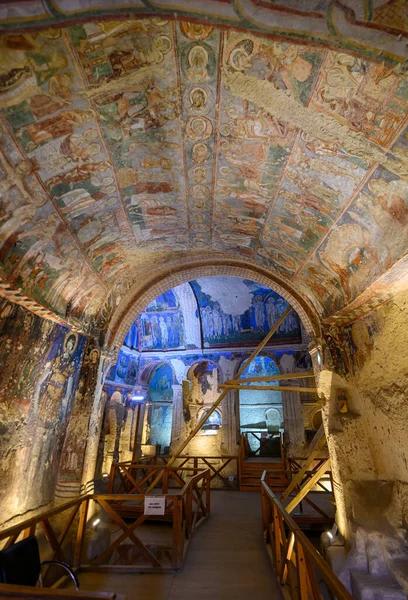
Kościół Tokalı (Kościół Klamry) jest największym i jednym z najważniejszych kościołów wykutych w skale na terenie Muzeum na Świeżym Powietrzu w Göreme. Słynie z wyjątkowych fresków bizantyjskich, zwłaszcza z efektownych niebieskich pigmentów, i jest uważany za jedno z największych arcydzieł sztuki sakralnej Kapadocji. Najważniejsze informacje Lokalizacja: Muzeum na Świeżym Powietrzu w Göreme, Göreme Czas zwiedzania: 15–30 minut Wstęp: W cenie biletu do Muzeum na Świeżym Powietrzu w Göreme Najlepszy czas na zwiedzanie: W godzinach otwarcia muzeum Atrakcje Po wejściu do kościoła Tokalı ukazuje się niezwykłe wnętrze pokryte szczegółowymi freskami przedstawiającymi sceny z życia Jezusa Chrystusa. Kościół składa się zarówno ze Starego Kościoła, jak i większego Nowego Kościoła, odzwierciedlających różne okresy architektury i dekoracji bizantyjskiej. Jego żywe kolory i artystyczne detale sprawiają, że jest to jedna z głównych atrakcji każdej wizyty w Muzeum na Świeżym Powietrzu w Göreme. Najważniejsze atrakcje Największy kościół w Muzeum na Świeżym Powietrzu w Göreme Spektakularne freski bizantyjskie Słynne niebieskie malowidła ścienne Części kościoła starego i nowego Jeden z najwspanialszych przykładów architektury sakralnej wykutej w skale w Kapadocji Jak zwiedzać Kościół Tokalı znajduje się tuż przy wejściu do Muzeum na Świeżym Powietrzu w Göreme i można go zwiedzać w ramach trasy muzealnej. Aby lepiej zrozumieć symbolikę, historię i znaczenie artystyczne fresków, zaleca się skorzystanie z wycieczek z przewodnikiem.
Message us on WhatsApp with any questions, or browse the tours.